Chaitra Navratri

Chaitra_Navratr

|| Chaitra Navratri ||

Chaitra Navratri Is also called vasant Navratri or Ram Navratri, falls in the month of Chaitra each year. Is the festival of nine days dedicated to the nine forms of Shakti (Mother Goddess) in the spring season. Chaitra Navratri signifies the start of “VIKRAM SAMBAT” i.e the Hindu New Year. The 1st day is called a GUDI PADAWA which mainly celebrates in Maharastra. This is celebrated during Vasantha Ritu (beginning of summer).There for another names falls as a VASANT NAVRATRA and the 9ths day of Navratrs is the birth date of Shree Rama so this festival also called as a Ram Navratra. At the time of War between Shree Rama and Ravana, It was Lord Rama who worshipped Maa Durga for 9 days before going to war in Ashwina Month to invoke the blessing of Maa Durga and then the period got changed of Durga Puja from Chaitra to Ashwin. This is why the Durga Puja during (September – October) is also known as Akal Bodhon or untimely invocation.


Legend behind the Chaitra Navratri :

King Dhruvasindu was killed by a lion when he went out hunting. Preparations were made to crown the prince Sudarsana. But, King Yudhajit of Ujjain, the father of Queen Lilavati, and King Virasena of Kalinga, the father of Queen Manorama, were each desirous of securing the Kosala throne for their respective grandsons. They fought with each other. King Virasena was killed in the battle. Manorama fled to the forest with Prince Sudarsana and a eunuch. They took refuge in the hermitage of Rishi Bharadwaja.

The victor, King Yudhajit, thereupon crowned his grandson, Satrujit, at Ayodhya, the capital of Kosala. He then went out in search of Manorama and her son. The Rishi said that he would not give up those who had soughts protection under him. Yudhajit became furious. He wanted to attack the Rishi. But, his minister told him about the truth of the Rishi’s statement. Yudhajit returned to his capital.

Fortune smiled on Prince Sudarsana. A hermit’s son came one day and called the eunuch by his Sanskrit name Kleeba. The prince caught the first syllable Kli and began to pronounce it as Kleem. This syllable happened to be a powerful, sacred Mantra. It is the Bija Akshara (root syllable) of the Divine Mother. The Prince obtained peace of mind and the Grace of the Divine Mother by the repeated utterance of this syllable. Devi appeared to him, blessed him and granted him divine weapons and an inexhaustible quiver.

The emissaries of the king of Benares passed through the Ashram of the Rishi and, when they saw the noble prince Sudarsana, they recommended him to Princess Sashikala, the daughter of the king of Benares.

The ceremony at which the princess was to choose her spouse was arranged. Sashikala at once chose Sudarsana. They were duly wedded. King Yudhajit, who had been present at the function, began to fight with the king of Benares. Devi helped Sudarsana and his father-in-law. Yudhajit mocked Her, upon which Devi promptly reduced Yudhajit and his army to ashes.

Thus Sudarsana, with his wife and his father-in-law, praised Devi. She was highly pleased and ordered them to perform Her worship with havan and other means during the Vasanta Navratri. Then She disappeared.Prince Sudarsana and Sashikala returned to the Ashram of Rishi Bharadwaja. The great Rishi blessed them and crowned Sudarsana as the king of Kosala. Sudarsana and Sashikala and the king of Benares implicitly carried out the commands of the Divine Mother and performed worship in a splendid manner during the Vasanta Navratri.Sudarsana’s descendants, namely, Sri Rama and Lakshmana, also performed worship of Devi during the Vasanta Navratri and were blessed with Her assistance in the recovery of Sita.

The fasting and feasting is part of the ritual of these nine days. Jagrans, Bhajan gatherings, temple visits are parts of the activities of devotees during navratri. It is the duty of the devout Hindus to worship the Devi (Mother Goddess) for both material and spiritual welfare during the Vasanta Navratri and follow the noble example set by Sudarsana and Sri Rama. He cannot achieve anything without the Divine Mother’s blessings. So, sing Her praise and repeat Her Mantra and Name. Meditate on Her form. Pray and obtain Her eternal Grace and blessings. May the Divine Mother bless you with all divine wealth!"

Related Article :

Navratri :
Nine Form of Durga During Navratri :

Share this article with your Network  : Bookmark and Share

Holi Dhuleti

Holi_Colors 
Holi The Festival of Colors
Holi, is a festival of Colors, Love and Happiness in the Hindu religion. Celebration of Unity and celebrates the triumph of good over evil, generally falls on a full moon day in the month of March (Falgun). Originally a festival to celebrate good harvests and fertility of the land in India. Holi is the main festival of North India besides Deewali. Normally whole month of FALGUN (FAGUA) is dedicated to festival Holi.

radha_krisha_holi
This exuberant festival is also associated with the immortal love of Krishna and Radha. There for the special celebration of Holi takes place at Braj region, in locations connected to the lord Krishna: ( Mathura , Vrindavan, Nandgoan , Barsana Etc). These places have become tourist destinations during the festive season of Holi, which lasts here to up to sixteen days. Holi is the 2nd largest festivals of the India which celebrating at every part and every region of the India by its own culture and by its own religion.

holi 
Holi is very oldest festival of hinduism which mentioned in MAHABHARATA , RAMAYANA and other Holy books too. Apart from the reference in the religious and historical texts, Holi also finds a reference in the sculptures on walls of old temples. A 16th century temple at Hampi, the capital of Vijayanagar (now in Karnataka) has a panel sculpted with the joyous scene of Holi celebrations. This painting illustrates a Prince and his Princess standing amidst maids who are waiting with pichkaris to drench the couple in colored water. Another painting on the theme related to Holi, the Vasanta Ragini - spring song or music is found in Ahmednagar in Maharashta. This 16th century painting depicts a royal couple sitting on a huge swing, and several maidens surrounding them playing music and spraying colors with pichkaris. 

radha_krishna_holi
Holi has a detailed description in the ancient Vedas and Puranas such as ‘Narad Purana’ and ‘Bhavishya Purana’. The festival of Holi also finds detailed descriptions in the Jaimini Mimansa. During an excavation, a stone inscription of 300 BC was found at Ramgarh and this stone inscription has mention of ‘Holikotsav’ i.e. the ‘celebrations of Holi’ written on it. This gives logic to the theories of the historian who believe Holi to be a celebration even before the birth of  Christ.

flower_holi
In RATNAVAL it mentioned “Witness the beauty of the great cupid festival which excites curiosity as the townsfolk are dancing at the touch of brownish water thrown from squirt guns. They are seized by pretty women while all along the roads the air in filled with singing and Drum-beating . Everything is colored yellowish red and rendered dusty by the heaps of scented powder blown all over “ RATNAVALI, 7th Century Drama.

holika_dahan
Even the Night of Holi ( Full Moon Day) also auspicious for the TANTRIK POOJA and for other tantric rituals too in Hinduism. Mantras, Tantras and Kavcham also recites by the Sadhu and Priest during the whole night. Followers also worshiping Goddess MAHALAXMI , MAHAKALIKA and Shree DURGA during this time.

The main legend of Celebration of Holi :
  1. It was on this day that Lord Siva opened his third eye and reduced Kamadev to ashes.
  2. It was on this day that Holika, the sister of the demon king Hiranyakasyapa, who tried to kill the child devotee Prahlad by taking him on her lap and sitting on a layer of woods which was set ablaze. Holika was burnt to ashes while Prahlad remained unscathed!
  3. It was again on this day that a Devil called Dhundhi, who was troubling the children in the kingdom of Prthu was made to run away for life, by the shouts and pranks of the mischievous boys. Though she had secured several boons that made her almost invincible, this – noise, shouts, abuses and pranks of boys – was a chink in her armour due to a curse of Lord Siva. The day itself came to be called ‘Holika’ since then.
prahlad_holika
 HOLIKA DAHAN - Full Moon Day of March ( Falgun)
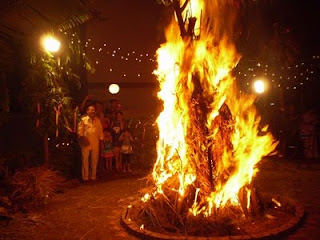
The festival's preamble begins on the night of the full moon. Bonfires are lit on street corners to cleanse the air of evil spirits and bad vibes, and to symbolize the destruction of the wicked. Holika, for whom the festival was named.

holi_dahan
The Legend of the Holika Dahan is :
Holika was a name of King Hiranyakasyapu was ambitious ruler, one who wanted absolute power so that he would be worshipped as God but the Kings Own son refused to obey his father King Hiranyakasyapu. Pralhad was a great devotee of Shree Vishnu/ NarayanaKing Hiranyakashyapu heard about the Prahlad's disobedience and decided to punish him severely. He asked his sister Holika for help.
holi_dahan
It was believed that Holika was immune to fire and would never be burnt, so the King asked Holika to sit in the centre of a bonfire with Prahlad on her lap, so that the fire could devour him. The bonfire was lit, and young Prahlad sat in Holika's lap, in its centre, praying to Lord Vishnu. As “OM Namo Bhagvate Vasudevay Namah”. His devotion saved him, leaving him untouched by the flames, but Holika was burnt to ashes. To mark this legend, huge bonfires are lit on the eve of Holi.

 worship_holi
A Holika Dahan preparation begins a month before the festival. People start collecting woods on the important crossroads of city. Holi Pooja takes place on an auspicious time in the evening a day before the Holi festival. Holi Pooja can be performed at any place. Collect and kept wood at public place on the day of Vasant Panchami with twigs, dried leaves, branches of trees .People light bonfires at night to celebrate the victory of 'good' over 'bad' which is called Holika Dahan.

holi_colors
Dhuleti or Dhulivandan or Holi
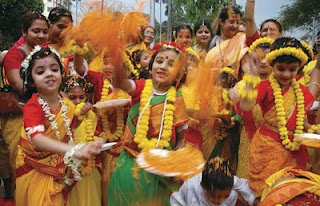
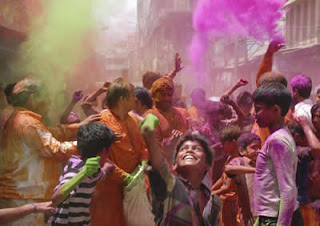
The 2nd Day of holi is called as a Dhuleti. Day of Celebration with Color’s Abeer and Gulaal. Holi is the most energetic Indian festival, filled with fun and good humour; even the strict rules of separation between castes are abandoned is celebrated by people throwing colored powder and colored water at each other. Teenagers spend the day flirting and misbehaving in the streets, adults extend the hand of peace, and everyone chases everyone else around, throwing brightly colored powder (gulal) and water over each other. The following morning, the streets fill with people running, shouting, giggling and splashing. bhang and thandai add to the uninhibited atmosphere.

celebration_holi
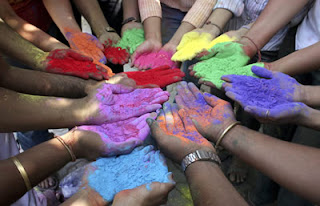
The colors of Holi, called 'gulal', were made at home, from the flowers of the 'tesu' or 'palash' tree, also called 'the flame of the forest'. These flowers, bright red or deep orange in color. This pigment and also 'aabir', made from natural colored talc, which were extensively used as Holi colors, are good for the skin. Food preparations also begin many days in advance, with assemblage of Gujhia, Sweets, kanji and various kinds of snack items including malpuas, mathri, puran poli, dahi badas, which are served to Holi guests.

colors_of_holi
Rangpanchami
It is celebrated on the fifth day (panchami) in the dark fortnight of the Hindu lunar month of Phalgun by throwing a red, fragrant powder (gulal) and splashing coloured water, etc. on others. Rang Panchami is a symbol of victory over raja-tama. Rang Panchami, played on Falgun Vadya Panchami involves invocation of Gods and is a part of worship of the manifest form of Gods. Its purpose is to activate the five elements of radiant manifest colours and to touch and feel the Deities who are attracted to the respective colours. These five elements are a source, which help activate the element of the Deities according to the spiritual emotion of the Jiva. Rang Panchami is the worship of the saviour form of the Deities.
holi_festival_celebration
Holi, very simply and unceremoniously reveals the golden key to happiness. The festival breaks all norms; it ignores all social inhibitions. For once, absolute freedom is given to human desires and senses. A day is given to live life as per one`s liking. From dancing like mad an singing loudly to using foul language, and from playing with colours to doing all mischief- one day in a year makes us small innocent kids.

freedom_holi
Holi is not a festival-its freedom and so it must be celebrated and experienced-for this occasional balm is a must for our anxious, overworked and perplexed souls.

Holi in Brief :
  • A spring festival, usually celebrated in March.
  • Holi also celebrates Krishna, and the legend of Holika and Prahalad.
  • Holi is particularly celebrated in North India.
  • Although Holi has religious roots there are few religious things to do.
  • Distinctions of caste, class, age, and gender are suspended during Holi.
  • A very exuberant festival, with dancing, singing, and throwing of paint.
  • Holi features gender rivalry, with contests between men and women, and public flirting.
  • Bonfires are lit during Holi, and food offerings are roasted.
The festival is officially celebrated on the day after full moon during the month of Phalunga, which falls in February-March

|| Radha Krishna Holi ||

Share this article with your Network  : Bookmark and Share

Maha Shivratri

Maha Shivratri

Rituals : Shivratri is celebrated in Phalguna (February-March) starting at about 5 P.M. and ending at 4 A.M. the next day Shiva is invoked by the chanting of ‘Om Namah Shivaya’ and recitation of ‘Shiva Ashtottara Namavali” and other sacred hymns. The Linga is worshipped throughout the night by bathing it every three hours successively in milk, yogurt, clarified butter, honey and finally in sacred water. After bathing, the Linga is decked with Alankaras  (decorations) like Vastra (dress), Abharana, (Jewelry), Pushpa (Flowers) Vibhuti (Sacred Ash) and Phala (fruits). Puja (rituals of worship) are then performed with flowers and leaves (Bilva Patra) and finally other offerings are made and sacred hymns are recited to bless the devotees

Legend & Stories : Lord Shiva, one of the most worshiped Gods for boons is manifested in different forms like Nataraja, Ardhanareeswara, Neelakantha, Gangadhara etc to symbolize the various powers of Nature controlling the activities on earth. One such manifestation is LINGA, which is considered as formless in the ordinary sense to make mankind aware of the birth of the Universe in Eternal Time. Maha Shivratri is the day when such a form was created by the great sages of India. It is also considered as the wedding anniversary of Shiva and his consort Parvati. The unmarried girls pray for handsome husbands and the married pray for sharing happiness with their husbands. This is also considered a day when Shiva swallowed poison and retained it in his throat to save the world from destruction. Hence people fast, pray, and practice Jagaran (all-night vigil) on this occasion.

Sahasrakalasabishekam : This is a very special and rare puja conducted during 10 days of Mahasivarathri festival. It is well known that Lord Siva is abhishekapriya (lover of ablutions). Lord Parasurama and Kroshta Muni, during their worship of the Lord here, are believed to have bathed the deity with Sahasrakalasam or a thousand pots of holy water according to Vedic rites.

Sivarathri Nrutham : Sivarathri Nrutham at Thrikkuratti temple, according to religious scholars, resembles the cosmic dance of Shiva, called ‘Anandatandava,' meaning, ‘the Dance of Bliss’ symbolizing the cosmic cycles of creation and destruction, as well as the daily rhythm of birth and death. The dance is a pictorial allegory of the five principle manifestations of eternal energy - creation, destruction, preservation, salvation, and illusion.

Mahasivarathri Procession : On Sivarathri day evening a grand procession starts from Kadapra Kainikkara Temple. It includes, several decorated floats, Kaavadi Aaatam, Mayilattom, Amman Kudom, Thaiyyam, Vela Kali, Kuthiyotta Chuvadu, richly caparisoned elephants and folk art forms etc. attracts thousands of devotees and tourists. When the main procession reaches Market Junction, other mini processions from Kurattikkadu Mutharamman Temple, Kurattissery Kannamkavil Mutharamman Temple, Thrippavoor Mahavishnu Temple, Vishavarsherikkara Subrahmanya Swami temple and Alumoodu Sivaparvathy Temple joins and makes the procession quite livening.

Panchaakshari : Shiva, as the god of destroying evil, is the third among the divine trinity of Hindu mythology. The holy mantra consisting of five-syllables: "Na" "Ma" "Shi" "Vaa" "Ya" (Om NamaH Shivaaya) in praise of Lord Shiva is chanted incessantly on special occasions like Shivaratri. His thousands of names, each of which describe His greatness, may also be chanted. Shiva means "auspicious". As Shankara, He is the giver of happiness to all. Nataraja (the king of dancers) is a favourite form adored by dancers and musicians.

Rudra Abhisheka : There is a special mantra in the Vedas (the most ancient scripture in the history of human race and which forms the fountain-head of the Hindu culture) - Rudra Sukta - which is recited by pundits while they offer a holy bath to Lord Shiva by way of washing a Shiva-linga or a Shaligrama which are the symbols of god with the waters of sacred rivers like the Ganges. This ritual is known as "Rudrabhisheka". A Shaligrama constitutes a sacred pebble that often conceals ammonite fossils within. Such precious stones are brought from the river Gandaki at the frozen summits of the Himalayas.

Mysticism : According to the mystic mythology of the Puraanaas, the Kailasa peak of the Himalayas is the abode of Shiva and He bears the Ganges on His head. As the Lord of creatures, He is metaphorically called as Pashupathi (with Nandi, the bull, His favourite animal) and His fearful nature is euphemised as Sarpabhushana. Shiva's posture in the meditation is ascribed to Him as the head of Yogis (Yogiraja) who practises various spiritual feats to attain salvation. Lord Shiva's divine consort, Goddess Parvati (who is also the daughter of Himalaya), is the deity of strength. Numerous stories in mythology describe the births of their two sons - Lord Ganesha and Lord Kartikeya (or Guha or Shanmukha or Skanda or Murugha) and their various significances.
Mrtyunjaya Mahaa Mantra : The Mrtyunjaya-maha-mantra, which is found in the Rudram, eradicates diseases, pain, sufferings and death:

ॐ त्र्यम्बकं यजामहे सुगंधिं पुष्टिवर्धनम् ।
उर्वारुकमिव बन्धनान्मृत्योर्मुक्षिय माऽमृतात् ॥

OM tryambakam yajaamahe 
sugandhim pushtivardhanam. I
urvaarukamiva bandhanaan

mrutyormukshiya maaamrritaat.. II

Meaning : I worship Lord Shiva the three-eyed one, who is full of fragrance and who nourishes all beings; may He liberate me from the death (of ignorance), for the sake of immortality (of knowledge and truth), just as the ripe cucumber is severed from its bondage (the creeper).


Share this article with your Network  : Bookmark and Share

Shivaratri

Shivaratri

Shivaratri

Maha Shivratri is a Hindu festival celebrated every year in reverence of Lord Shiva. Maha Shivratri is observed on the 13th night/14th day in the Krishna Paksha every year on the month of Phalguna or Maagh according to the Hindu calendar. Mahashivratri is not only one of the magnificent festivals in India but also in Nepal and other regions where Lord Shiva is worshipped. Devotees on this day remain on fast or perform hour long spiritual meditation by following rituals to commemorate Mahashivratri and be blessed with grace. The festival is principally celebrated by offerings of Bael or Bilva/Vilvam leaves to Lord Shiva, all-day fasting and an all-night-long vigil.


shivaratri
After creation was complete, Parvati asked Lord Shiva which devotees and rituals pleased him the most. The Lord replied that the 14th night of the new moon, in the dark fortnight during the month of Phalgun, is his most favourite day. Parvati repeated these words to her friends, from whom the word spread over all creation.


shivaratri
Hymns in praise of Lord Shiva, such as :
are sung with great fervour and devotion. People repeat the Om Namah Shivaya. He who utters the Names of Shiva during Shivaratri, with perfect devotion and concentration, is freed from all sins. He reaches the abode of Shiva and lives there happily. He is liberated from the wheel of births and deaths. Many pilgrims flock to the places where there are Shiva temples.


shivaratri
नागेन्द्रहाराय त्रिलोचनाय
भस्माङ्गरागाय महेश्वराय ।
नित्याय शुद्धाय दिगम्बराय
तस्मै नकाराय नमः शिवाय ॥१॥

Meaning: (Salutations to Him) Who has the King of Snakes as His Garland and Who has Three Eyes, Whose Body is Smeared with Sacred Ashes and Who is the Great Lord, Who is Eternal, Who is ever Pure and Who has the Four Directions as His Clothes, ( signifying that He is ever Free ), Salutations to that Shiva, Who is represented by syllable "Na", The first syllable of the Panchakshara mantra "Na-Ma-Shi-Va-Ya".

shivaratri
मन्दाकिनीसलिलचन्दनचर्चिताय
नन्दीश्वरप्रमथनाथमहेश्वराय ।
मन्दारपुष्पबहुपुष्पसुपूजिताय
तस्मै मकाराय नमः शिवाय ॥२॥


Meaning: (Salutations to Him) Who is Worshipped with Water from the River Mandakini and Smeared with Sandal Paste, Who is the Lord of Nandi and of the Ghosts and Goblins, the Great Lord, Who is Worshipped with Mandara and Many Other Flowers, Salutations to that Shiva, Who is represented by syllable "Ma", The second syllable of the Panchakshara mantra "Na-Ma-Shi-Va-Ya".

shivaratri
शिवाय गौरीवदनाब्जबालसूर्याय
दक्षाध्वरनाशकाय ।
श्रीनीलकण्ठाय वृषध्वजाय
तस्मै शिकाराय नमः शिवाय ॥३॥


Meaning: (Salutations to Him) Who is Auspicious and Who is like the Newly Risen Sun Causing the Lotus-Face of Gauri (Devi Parvati) to Blossom, Who is the Destroyer of the Sacrifice (Yajna) of Daksha, Who has a Blue Throat and has a Bull as His Emblem, Salutations to that Shiva, Who is represented by syllable "Shi", The third syllable of the Panchakshara mantra "Na-Ma-Shi-Va-Ya".

shivaratri
वशिष्ठकुम्भोद्भवगौतमार्यमूनीन्द्रदेवार्चितशेखराय ।
चन्द्रार्कवैश्वानरलोचनाय
तस्मै वकाराय नमः शिवाय ॥४॥


Meaning: (Salutations to Him) Who is Worshipped by the Best and most Respected Sages like Vashistha, Agastya and Gautama and also by the Gods and Who is the Crown of the Universe, (Salutations to Him) Who has the Chandra (Moon), Surya (Sun) and Agni (Fire) as His Three Eyes, Salutations to that Shiva, Who is represented by syllable "Va", The fourth syllable of the Panchakshara mantra "Na-Ma-Shi-Va-Ya".

shivaratri
यज्ञस्वरूपाय जटाधराय
पिनाकहस्ताय सनातनाय ।
दिव्याय देवाय दिगम्बराय
तस्मै यकाराय नमः शिवाय ॥५॥


Meaning: (Salutations to Him) Who is the Embodiment of Yajna (Sacrifice) and Who has Matted Hairs, Who has the Trident in His Hand and Who is Eternal, Who is Divine, Who is the Shining One and Who has the Four Directions as His Clothes (signifying that He is ever Free), Salutations to that Shiva, Who is represented by syllable "Ya", The fifth syllable of the Panchakshara mantra "Na-Ma-Shi-Va-Ya".

shivaratri
पञ्चाक्षरमिदं पुण्यं यः पठेच्छिवसंनिधौ ।
शिवलोकमावाप्नोति शिवेन सह मोदते ॥६॥

Meaning: Whoever Recites this Panchakshara (hymn in praise of the five syllables of Na-Ma-Shi-Va-Ya) near Shiva (Lingam), Will Attain the Abode of Shiva and enjoy His Bliss.

Sharad Purnima

sharad_purnima
शरद पूर्णिमा, जिसे कोजागरी पूर्णिमा या रास पूर्णिमा भी कहते हैं; हिंदू पंचाग के अनुसार आश्विन मास की पूर्णिमा शरद पूर्णिमा कहते हैं। ज्‍योतिष के अनुसार, पूरे साल में केवल इसी दिन चंद्रमा सोलह कलाओं से परिपूर्ण होता है। इसी को कौमुदी व्रत भी कहते हैं।

इसी दिन श्रीकृष्ण ने महारास रचा था। मान्यता है इस रात्रि को चंद्रमा की किरणों से अमृत झड़ता है।  चाँद की किरणों में पौष्टिक तत्व होते हैं. जिसमे कई रोगनाशक गुण होते है. तभी इस दिन उत्तर भारत में खीर बनाकर रात भर चांदनी में रखने का विधान है। चाँद और शरद पूर्णिमा के दिन के बीच एक निकट संबंध है - चाँद इस दिन पृथ्वी के करीब माना जा रहा है और यह माना जाता है कि चाँद की किरणों में पौष्टिक तत्व होते हैं.


                                                       व्रत की विधि
इस दिन मनुष्य विधिपूर्वक स्नान करके उपवास रखे और जितेन्द्रिय भाव से रहे। धनवान व्यक्ति ताँबे अथवा मिट्टी के कलश पर वस्त्र से ढँकी हुई स्वर्णमयी लक्ष्मी की प्रतिमा को स्थापित करके भिन्न-भिन्न उपचारों से उनकी पूजा करें, तदनंतर सायंकाल में चन्द्रोदय होने पर सोने, चाँदी अथवा मिट्टी के घी से भरे हुए १०० दीपक जलाए।

इसके बाद घी मिश्रित खीर तैयार करे और बहुत-से पात्रों में डालकर उसे चन्द्रमा की चाँदनी में रखें। जब एक प्रहर (३ घंटे) बीत जाएँ, तब लक्ष्मीजी को सारी खीर अर्पण करें। तत्पश्चात भक्तिपूर्वक सात्विक ब्राह्मणों को इस प्रसाद रूपी खीर का भोजन कराएँ और उनके साथ ही मांगलिक गीत गाकर तथा मंगलमय कार्य करते हुए रात्रि जागरण करें।तदनंतर अरुणोदय काल में स्नान करके लक्ष्मीजी की वह स्वर्णमयी प्रतिमा आचार्य को अर्पित करें।इस रात्रि की मध्यरात्रि में देवी महालक्ष्मी अपने कर-कमलों में वर और अभय लिए संसार में विचरती हैं और मन ही मन संकल्प करती हैं कि इस समय भूतल पर कौन जाग रहा है? जागकर मेरी पूजा में लगे हुए उस मनुष्य को मैं आज धन दूँगी।


                                                               शरद पूर्णिमा की कथा

एक साहुकार के दो पुत्रियाँ थी। दोनो पुत्रियाँ पुर्णिमा का व्रत रखती थी। परन्तु बडी पुत्री पूरा व्रत करती थी और छोटी पुत्री अधुरा व्रत करती थी। परिणाम यह हुआ कि छोटी पुत्री की सन्तान पैदा ही मर जाती थी। उसने पंडितो से इसका कारण पूछा तो उन्होने बताया की तुम पूर्णिमा का अधूरा व्रत करती थी जिसके कारण तुम्हारी सन्तान पैदा होते ही मर जाती है। पूर्णिमा का पुरा विधिपुर्वक करने से तुम्हारी सन्तान जीवित रह सकती है।


उसने पंडितों की सलाह पर पूर्णिमा का पूरा व्रत विधिपूर्वक किया। उसके लडका हुआ परन्तु शीघ्र ही मर गया। उसने लडके को पीढे पर लिटाकर ऊपर से पकडा ढक दिया। फिर बडी बहन को बुलाकर लाई और बैठने के लिए वही पीढा दे दिया। बडी बहन जब पीढे पर बैठने लगी जो उसका घाघरा बच्चे का छू गया। बच्चा घाघरा छुते ही रोने लगा।बडी बहन बोली-” तु मुझे कंलक लगाना चाहती थी। मेरे बैठने से यह मर जाता।“ तब छोटी बहन बोली, ” यह तो पहले से मरा हुआ था। तेरे ही भाग्य से यह जीवित हो गया है। तेरे पुण्य से ही यह जीवित हुआ है। “उसके बाद नगर में उसने पुर्णिमा का पूरा व्रत करने का ढिंढोरा पिटवा दिया।


इस प्रकार प्रतिवर्ष किया जाने वाला यह कोजागर व्रत लक्ष्मीजी को संतुष्ट करने वाला है। इससे प्रसन्न हुईं माँ लक्ष्मी इस लोक में तो समृद्धि देती ही हैं और शरीर का अंत होने पर परलोक में भी सद्गति प्रदान करती हैं।

Introduction of Navratri


|| NAVRATRI ||

The name NAVRATRI is self described as a NAV and RATRA, Nav means Nine and Ratra means Night. i.e. 9 days dedicated to divine power Maa Durga , Maha-Laxmi , Maha-Saraswati and Maha-Kali. There are 5 Navratra’s in the whole year. Mainly three Navratri’s are celebrating in various parts of the country. They are Sharad Navratri, Vasant Navratri and Ashada Navratri. Hinduism is the only religion in the world which has emphasized to such an extent the motherhood of God. To celebrate a good harvest and to propitiate the nine planets, women also plant nine different kinds of food grain seeds in small containers during these nine days.
No other major religion of the world acknowledges God as part female, or is willing to fully depict her as the Goddess. But in Hinduism, the Goddess it self called Shakti, is the emanating power, the essence and the creative manifestation of the Supreme Being, who is beyond opposites. Shakti is the original power at the root of creation, limitless expansion and expressions of Nature. It is also referred to as the Âdi Shakti or Brahmm Shakti. All the visible and invisible plays of Nature are reflections of this eternal Shakti. All powers originate from it; all existence emerges from it. She is who enables the creation, growth and protection of the universe. She is the Mother of Trinity- Brahma, Vishnu and Mahesh. The Skanda Purana describes this fact in a telling manner– Lord Shiva without Shakti is like a shava (a corpse); Lord Shiva is "Shiva" because of the presence of Shakti in Him.

This unique broadness of Hinduism makes Navratri the world's greatest festival dedicated to the Goddess Durga . This yearly festival is celebrated for nine or ten days in diff months of the whole year. Hindus observe this festival in a wide variety of ways, depending on their region, local history and family influences. The nine-day period of Navratri is of supreme importance for physical, mental and spiritual health as it lies at the juncture of two seasons.

Brief description of five Navratrie’s of the Year.

1
. Chaitra Navratri, Vasanta Navratri or Ram Navratri -:

Chaitra Navratri Is also called vasant Navratri or Ram Navratri, falls in the month of Chaitra (March) each year. is the festival of nine days dedicated to the nine forms of Shakti (Mother Goddess) in the spring season. Chaitra Navratri signifies the start of “VIKRAM SAMBAT” i.e the Hindu New Year. The 1st day is called a GUDI PADAWA which mainely celebrates at Maharastra state. Even it is celebrated all over India with full dedication, enthusiasm. This is one of the most auspicious occasions for Hindus and conveys pure happiness.

2. Ashada Navratri -:

Ashada Navratri, also referred as Gupta or Gayatri or Shakambari Navratri, is nine days dedicated to the nine forms of Shakti (Mother Goddess) in the month of Ashada (June – July). Gupta Navratri is observed during the Ashada Shukla Paksha (waxing phase of moon). Shak means Vegetable . this navratri also dedicated to Devi Shakambhari who is worship as a leafy Vegetable.

3. Sharad Navratri - :

This is the most important navratri among all the 5 navratri of the year Falls in Sharad season ( Oct –Nov) and is simply called Maha Navratri (the Great Navratri) and is celebrated in the month of Ashivina as per hindu calendar. Sharad Navratri celebrated all parts of the India on very big scale including Gujrat and West - Bengal

4. Poushya Navratri -:

Poushya Navratri, is nine days dedicated to the nine forms of Shakti (Mother Goddess) in the month of Poushya (Dec – Jan). Poushya Navratri is observed during the Poushya Shukla Paksha (waxing phase of moon).

5. Magha Navratri -:

Magha Navratri, also referred as is nine days dedicated to the nine forms of Shakti (Mother Goddess) in the month of Magha (Jan – Feb). Magha Navratri is observed during the Magha Shukla Paksha (waxing phase of moon).

Navratri is celebrated in different ways throughout India.
 
In north India people observe the Navratras, when they undertake fasts for a period of nine days. The devotees break their fast on the ninth day and invite young girl’s home, treating the girls as manifestations of Durga Maa herself. These girls, called "Kanjak Devis", are offered the traditional food of "Puri", "Halwa" and "Chana". They are then offered red bangles and chunnis (veils) to wear, along with some money, known as "Shagun". In most of India and especially in the North, Ram Lila and Navratri celebrations are not entirely separate. In the Ramayana, Rama invokes the help of Durga in his battle against Ravana, so many understand that the Goddess is being honored in gratitude during this celebration of the incarnation of Vishnu. It is not uncommon for home shrines to honor the Goddess along with Rama or even Krishna during ri. Temples dedicated to Shakti also make arrangement for pujas and vratasNavrat to mark these nine days as true symbols of devotion and adoration towards the divine mother During the nine days of Navratri, feasting and fasting take precedence over all normal daily activities amongst the Hindus.People keep fasts, go to temples, and sing devotional prayers during these nine days. In homes people place the images of goddess Durga and worship her by singing devotional songs and bhajans. Most of the people visit temples that are beautifully decorated with lights and flowers. Navratri or Navadurga Parva happens to be the most auspicious and unique period of devotional sadhanas and worship of Shakti,the sublime, ultimate, absolute creative energy of the Divine conceptualized as the Mother Goddess–Durga, whose worship dates back to prehistoric times before the period of Vedic age

In the South Indian states of Tamil Nadu and Karnataka, it is celebrated by setting up of Golu pronounced as Golu or Kolu. It is believed that this was a means to invite people home to celebrate the festivities with them. In Karanataka, particularly Mysore on the 10th day the enacting of destruction of evil (Ravana destroyed by Rama) is displayed with the lighting of dolls representing Ravana and forces of evil.

Celebration of the Navratri in Western part of the India uniq then the another part of the India. The most important feature of the Navratri here is the Dandiya Raas, also known as Garba. Garba is the traditional folk dance of Gujarat, but it has now become popular all over the country, with many Raas Pandals being set up in many parts of the country, during Navratri.
An ornamented pot is placed in the centre, with a bright diya (lamp) kept inside it. Womenfolk dance around it in a circle, singing traditional garba songs. Mother Durga, who is referred to "Ambe Maa", is worshipped for joy, prosperity and happiness.


The Dandiya Raas is a vibrant, joyous dance that is played with dandiyas or wooden sticks. The dancers, both male and female, dress up in colourful traditional costumes and spin around forming patterns, while also dancing to the rhythm of the music. While the men wear churidar-kurtas or the traditional Gujarati apparel, the women wear colourfully embroidered, mirror-work ghagra-cholis (flare-skirt-and-blouse sets).

The Durga Puja is one of the biggest festivals in Esatern part of India. Those living in Eastern India believe in Ma Shakti as the Ultimate Supreme Being. Devotees conduct the Durga Puja during this time - a festival that is famous all over the world for its sheer grandeur. Beautifully crafted larger-than-life clay idols of Goddess Durga, killing the demon Mahisha, are set up in equally huge public pandals, temples and so on. Various pujas and cultural programmes, including dance and music shows, are performed during this period. These Durga idols are worshipped for five days and then immersed in the river on the fifth day.

It is a festival that brings crowds of devotees and tourists from many parts of India and abroad. Huge idols of the Devi are worshipped through the ten days and different manifestations of the Devi are worshipped each night. The Durga pandals are decorated brightly and the Devi herself is adorned with the finest silks and jewellery. Prayers, bhajans (singing of hyms) and homas (fire rituals) are conducted, after which there is also the Annadaan (mass feeding).

Vedic Existance of Navratri 

A whole chapter in the tenth mandal of the holy Rigveda deals with the devotional sadhanas of Shakti. The "Devi Sukta" and "Usha Sukta" of the Rigveda and "Ratri Sukta" of the Samveda similarly sing paeans of praise of sadhanas of Shakti.

Before the beginning of the Mahabharat war, Lord Krishna had worshipped Durga – the Goddess of Shakti– for the victory of the Pandvas.

You will find in the Devi Sukta of the Rig Veda Samhita that Vak, symbolising speech, the daughter of the sage Anbhirna, realised her identity with the Divine Mother, the Power of the Supreme Lord, which manifests throughout the universe among the gods, among men and beasts and among the creatures of the deep ocean.

In the Kena Upanishad, you will find that the Divine Mother shed wisdom on Indra and the gods and said that the gods were able to defeat the demons only with the help of the power of the Supreme Lord.

The worship of Devi, the universal Mother, leads to the attainment of knowledge of the Self. The story in the Kena Upanishad known as the "Yaksha Prasna", supports this view. It tells how Uma, the Divine Mother, taught the Truth to the gods. Goddess Shakti thus sheds wisdom on Her devotees.

The original or Adi Shakti is beyond human comprehension. Bhagavan Krishna says in the Gita: "This is only My lower nature. Beyond this is My higher nature, the life-principle which sustains the universe".

The Upanishad also says: "The supreme power of God is manifested in various ways. This power is of the nature of God, manifesting as knowledge, strength and activity".


Truly speaking, all beings in the universe are Shakti-worshippers, whether they are aware of it or not, for there is no one who does not love and long for power in some form or other. Physicists and scientists have now proved that everything is pure, imperishable energy. This energy is only a form of divine Shakti which exists in every form.

Lord Brahma is cited in the Markandey Purana as mentioning to Rishi Markandey that the first incarnation of Shakti was as Shailputri. Other incarnations of the Divine Mother are: Brahmcharñi, Chandraghanta, Kushmanda, Skandamata, Katyayani, Kalratri, Mahagauri and Siddhidatri in that order. These nine manifestations of Shakti, are worshipped as "Nava-Durga". The fifth chapter of the Rudra Sanhita of Shiva Purana also vividly describes the various Divine Emanations of Durga. 

Nine Form of Durga During Navratri :


Share this article with your Network  : Bookmark and Share

Ganesh Chaturthi

Ganesh Chaturthi


Rituals : The festival of Ganesh Chaturthi is celebrated largely in Central and South India by people of all classes, high and low, rich and poor, young and old, men and women of all occupations primarily for favor of removing all obstacles in their progress and for granting of various boons. It is celebrated on the fourth day of the bright fortnight of Bhadrapada (August- September) to commemorate the birthday of Lord Ganesh, born to Lord Shiva and Goddess Parvati through Cosmic power The birthday celebration is marked with decorations of all sorts and continues for ten days until the fourteenth day in most of the community centers and even in private houses with great zeal, enthusiasm and devotion.

Several types of Pujas, Bhajans, and Aartis are performed and many songs both vocal and instrumental are sung in His praise by young and old. In some places a variety of dance and musical entertainment by renowned artists is organized. He is identified in different forms and colors, the most popular form of worship as a God is the one shown as an adult in the sitting position, in crimson color, with an elephant head with large ears, human body, large belly with a serpent around, and four or more hands holding sweets, a rosary, a conch, a trishul, some flowers, and many other articles, mounted on a rat.

A variety of sweets are prepared and served as Prasad. At the end of the celebration, the idols are taken in processions by devotees, and immersed in water, be it a stream, a lake, the river or the sea. The strong central belief in all these activities is in the progress and welfare of individuals and communities, the old obstacles are removed and new one prevented.

Legend & Stories: The elephant head is considered as symbolic of power of strength, wisdom, memory, keen hearing and less talking. The rat is a symbol of greedy desires that can be controlled by wisdom. He has two consorts Siddhi (Achievement) and Buddhi (Intelligence). Legend says that on one of his birthdays, Lord Ganesh was enjoying himself in a garden, the Moon looked at him and his figure and laughed ridiculously. On that Ganesh cursed the Moon  that who ever sees him on the fourth day of the month would face several obstacles in his life.

The Moon then apologized for his behavior and prayed to Lord Ganesh to excuse him for his conduct and redeem the curse. Ganesh then pronounced that who ever performs pujas and celebrations in his honor on that date would be saved from the curse, this is the reason that Ganesh celebrations are done on Chaturdhi, the fourth day of Lunar month, Bhadrapad. Ganesh is said to have written, non-stop, the great Mahabharata with his broken trunk as  dictated by the sage Vyasa. He did it on condition that Vyasa would dictate non-stop the entire Mahabharata. Thus he became the first stenographer known in legends. Once his parents asked him and his brother Kumaraswami, to go around the world and whoever did the task first would be rewarded well.
While Kumaraswami went around the world with his own vehicle, the peacock, Ganesh chose just to go around his parents only and demanded the reward. Asked why he had done so, he replied that his parents are his world and so he completed the task in all reverence to his parents. Shiva and Parvati were pleased with his answer and he was duly rewarded. There are many other mythological stories that exist for people to understand and live the Hindu way of life.
Share this article with your Network  : Bookmark and Share

Krishna Janmashtami || Krishnashtami

Krishna_Janmashtami

|| Krishna Janmashtami  ||

Krishna Janmashtami is also known as Krishnashtami, Gokulashtami, Ashtami Rohini, Srikrishna Jayanti and Sree Jayanthi. According to the Hindu calendar this religious festival "Krishna Janmashtami" is celebrated on the Ashtami of Krishna Paksh or the 8th day of the dark fortnight in the month of Bhadon. Based on scriptural details and astrological calculations the date of Krishna's birth, known as Janmashtami is 19 July 3228 BCE. Most people in India celebrate Krishna Janmashtami based on Lunar Calendar but few temples and some regions in South India observe Krishna Janmashtami based on Solar Calendar. All over India this day is celebrated with devotional songs and dances, pujas, aarti, blowing of the Conch and rocking the cradle of baby Sri Krishna. People do fast on this day and recite the life story and teaching of Sri Krishna noted in the form of slokas in Bhagwad Gita also singing his divine leela.

Krishna_Janmashthami

Lord Krishna is one of the most popular Gods in Hinduism. He is believed to be the ninth incarnation of Lord Vishnu. Lord Krishna was the eighth son born to the princess Devaki and her husband Vasudeva in Mathura city. Lord Krishna was born in Mathura and raised in Gokul by his foster parents Yashoda and Nanda. 
Dahi_Handi
Janmaashtami or Gokulashtami popularly known in Mumbai and Pune as Dahi Handi. During this ceremony a large earthenware pot is filled with milk, curds, butter, honey fruits etc. and is suspended from a height between 20 to 40 feet or above. Young men and boys come forward to claim this prize. They construct a human pyramid by standing over each other's shoulders till the pyramid is tall enough to enable the top-most person to reach the pot and claim the contents after breaking it. In Manipur Janmaashtami is known as Krishna Janma, is festival celebrated at two temples in Imphal. The first festival is at the Govindaji temple and the second is at the International Society for Krishna Consciousness (ISKCON) temple.  Mathura, Gokul and Vrindavan are places in Uttar Pradesh associated with Krishna's childhood. People go there from all over india to participate in the festival celebrations. Some people celebrate the festival by visiting the Dwarkadhish temple in the city of Dwarka in Gujarat, where Krishna is believed to have established his Kingdom. In Southern India, floors in houses are decorated with footprints made from flour, to symbolize Krishna's childhood sport of stealing butter from houses. In Bangladesh Janmashthami is a national holiday.

Krishna_Janmashthami
 || Krishna Grit Snan ( Ghee Bath) ||


Krishna_Janmashthami
|| Krishna Madhu Snan ( Honey Bath) ||


Krishna_Janmashthami
|| Krishna Dadhi Snan ( Curd Bath) ||


Krishna_Janmashthami
|| Krishna Dugdha Snan (Milk Bath) ||


Krishna_Janmashthami
|| Krishna Sharkara Snan (Sugar Bath) ||


Krishna_Janmashthami
 || Krishna Panchmrut Snan ||
( Ghee, Curd, Milk , Sugar & honey Snan)

May the Natkhat Nandlal always give you many reasons to be Happy, and you find peace in Krishna consciousness.
Happy Janmashtami...!

Top Bollywood Janmashtami songs.
  • Bluff Master – Govinda Aala Re Aala
  • Muqabla – Teen batti wala govinda aala
  • Khuddar – Mach Gaya Shor Sari Nagri Re
  • Satyam Shivam Sundaram – Yashomati Maiyya Se Bole Nandlala
  • Badla – Shor mach gaya shor dekho aaya maakhan chor
  • Kala Bazar- Ala re Govinda
  • LAMHE – Mohe Chedo Na
  • Vaastav – Har taraf hai ye shor aaya gokul ka chor
  • Hello Brother – Chandi Ki Daal Par


|| Krishna Janmashtami Video ||

 
|| Nand Gher Aanand Bharyo ||


|| Shree Krishna Sharanam mamah ||


|| Hare Krishna Hare Krishna Krishna ||

  © Blogger templates The Professional Template by 2008

Back to TOP